VIPER: Vulnerability Intelligence Pattern Extraction and Reporting
Principal Investigator, 2026 Connecticut AI Alliance (CAIA) Faculty and Graduate Research Support Grant ‘‘VIPER: Vulnerability Intelligence Pattern Extraction and Reporting,’’ $10,000, 2026.
Co-Principal Investigator: Stan Kurkovsky (Computer Science)
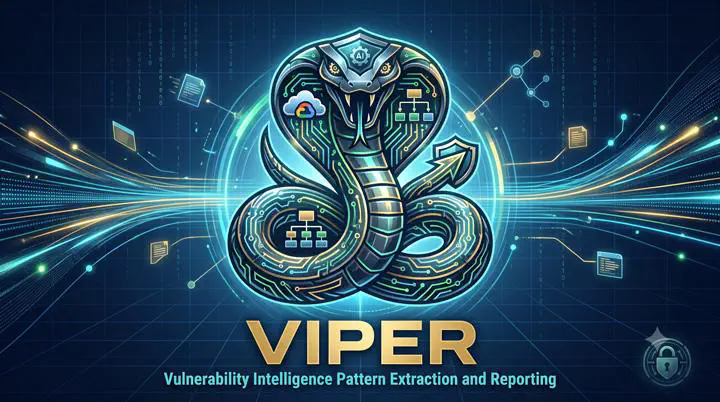
VIPER, which stands for Vulnerability Intelligence Pattern Extraction and Reporting, is a research project I lead that tackles one of the hardest problems facing security teams today: making sense of an overwhelming and constantly growing stream of vulnerability information. Every day, new software weaknesses are disclosed across countless systems and sources, far more than any team can manually review. The result is that meaningful signals, the patterns that indicate where real risk is emerging, often get buried in the noise. VIPER aims to surface those signals automatically, extracting and classifying patterns in vulnerability data so that defenders can respond faster and in a more targeted way.
At a technical level, the project builds a structured vulnerability taxonomy and an ingestion pipeline hosted on cloud infrastructure, transforming raw and largely unstructured vulnerability information into organized, analyzable intelligence. The work spans the full arc of a real system, from designing the underlying architecture and data model to developing the analysis tooling that turns collected data into usable insight. Rather than treating each disclosure in isolation, VIPER focuses on the relationships and recurring characteristics across vulnerabilities, with the goal of helping security teams cut through the volume and prioritize what matters most.
Just as important to me as the research outcomes is how the work gets done. VIPER is carried out by a student development team working in structured sprints, which makes the project both a genuine research effort and a hands-on training ground in applied security and modern software practice. Students take ownership of real design decisions, contribute to a system that solves an authentic problem, and build the kind of professional experience that prepares them for careers in the field. Supported by a competitive research grant, VIPER reflects my broader commitment to advancing cybersecurity research while developing the next generation of practitioners through meaningful, real-world work.